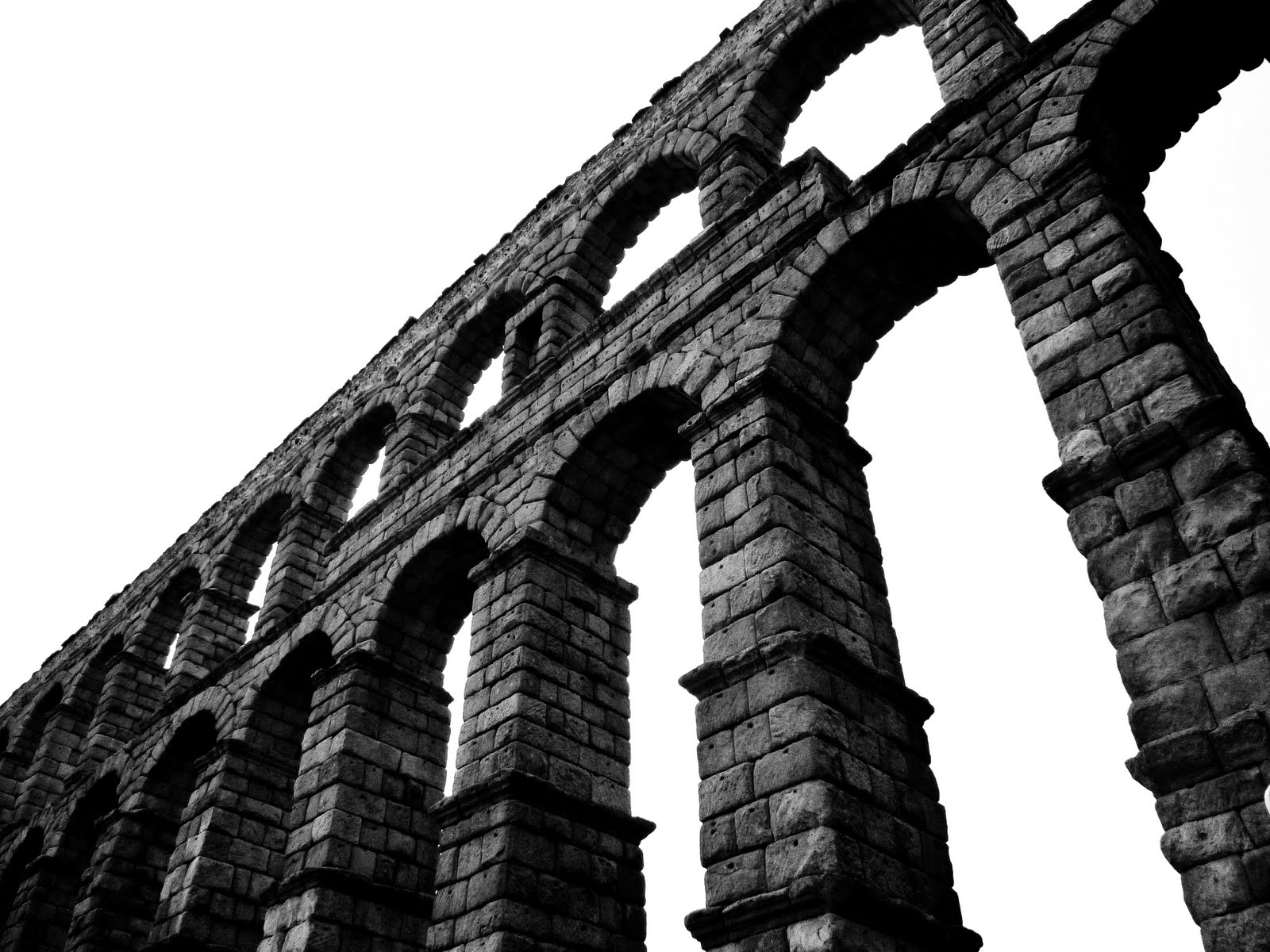
Segovia - Aqueducts

Toledo - Cathedral
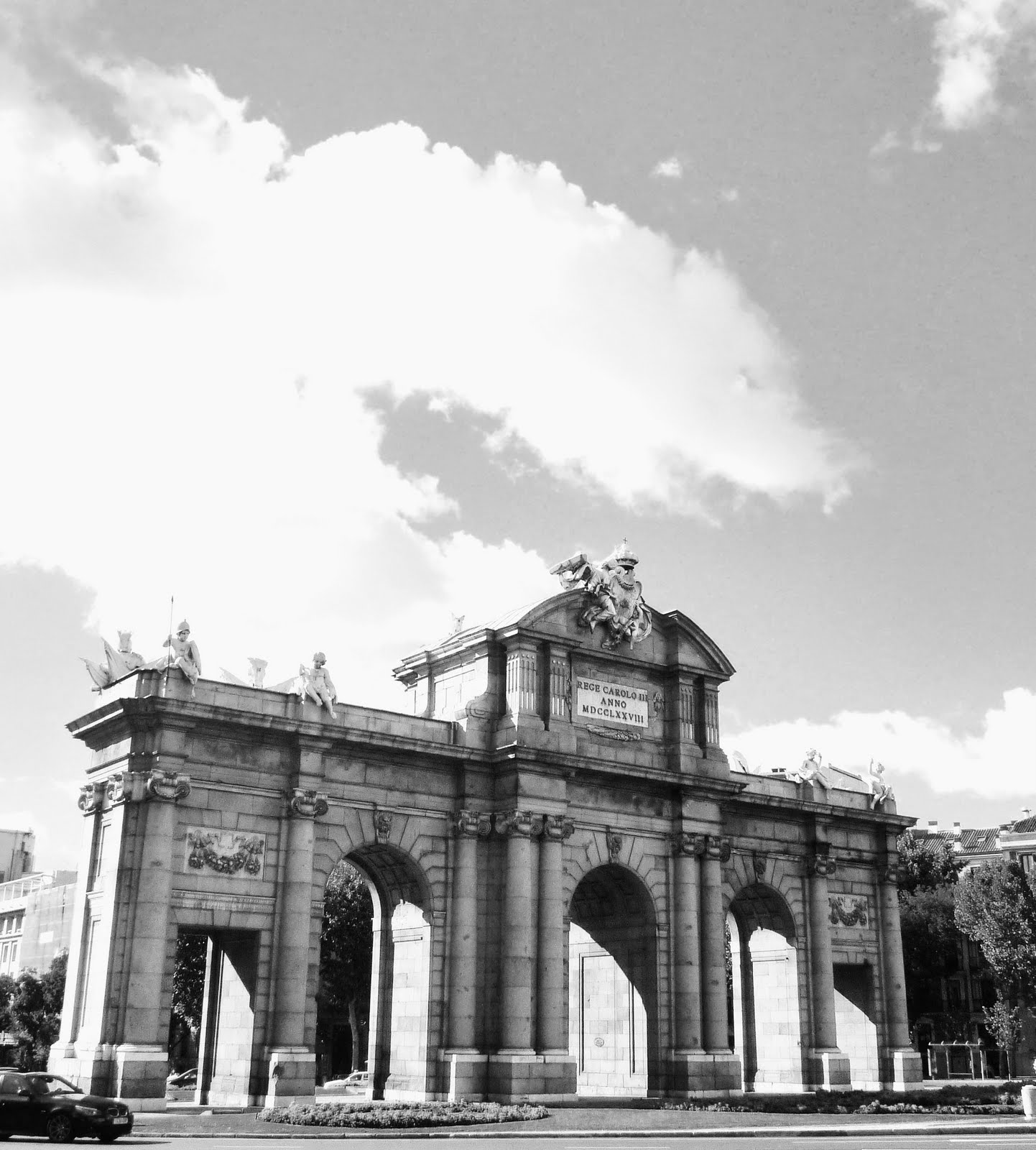
Madrid - Puerta de Alcala
Bueno, probablemente sabes que Cristobal Colon descubrió America y los EEUU celebran ese con una fiesta el 12 de Octubre. Pero, ese era algo para celebra por los Españoles también. Encontraron una tierra nueva para utilizar y colonizar, entonces, el 12 de Octubre es un día de fiesta aquí también. Por eso, no tuvimos clases el 11 o 12 de Octubre, dándonos una oportunidad para explorar nuestro país nuevo. Decidimos que Madrid es la ciudad perfecta para empezar nuestra exploración.
Madrid: Día 1 – 8 Octubre
Consideramos volar a Madrid, pero Kristine tiene un coche en Santander y pensamos que sería más fácil y quizás más barato (no fue), entonces Kristine, Josh, Hillary, Caitlyn y yo nos echamos en el coche y empezamos nuestro viaje para Madrid a las 3 por la tarde después de nuestras clases. Teníamos mapas, un GPS, y un libro de guía, estábamos preparados por todo. Pues, seguíamos la direcciones que el GPS nos decía, porque siempre puedes depender en tecnología. O quizás no. El GPS nos dirigió a una autovía pequeña que pasaba por las montañas. Perdimos una hora antes de que corrijamos nuestra ruta.
Bueno, llegamos en Madrid antes de las diez y encontramos el albergue, La Posada de las Huertas. El albergue está situada en una calle de peatones muy cerca a la Puerta del Sol, los museos de arte, y mucho de que querrías ver. Era muy cómodo y limpio y todos quienes encontramos eran muy amables. Encontramos unas chicas quienes estudiaban en Sevilla en la habitación de las chicas. Hablábamos un rato y después fuimos a una plaza muy cerca al albergue.
En la plaza, se llama Plaza de Santa Ana, entramos en una cervecería donde Hemmingway le gustaba pasar el tiempo. Comimos unas tapas y bebimos sangría y regresamos bastante temprano al albergue.
Madrid: Día 2 – 9 Octubre
Nos despertamos bastante temprano para ir por Madrid con un guía. Después de un desayuno gratis de tostada con mermelada, leche y una manzana salimos con nuestra guía, Pablo. Porque estaba lloviendo, Pablo llevaba un paraguas que parecía como una mariquita. Nos llevó a la Puerta del Sol para empezar nuestro tour de la ciudad.
Primero vimos la estatua de un oso y un árbol que representa Madrid. Pablo dijo que representa Madrid porque al oso le gusta comer la fruta del árbol porque es alcohólica y le gusta pasar lo bien, como los ciudadanos de Madrid. Caminamos a la Plaza Mayor, por unas calles pequeñas históricas y pasamos edificios antiguos como el Palacio y la Opera. Pablo nos explicó que un rey con problemas de la mente quería ser recordado por algo, entonces movió el capital a Madrid de Toledo. También Pablo nos contó la historia de Madrid, incluyendo historia de las diferentes reyes como los Asturias y los Borbones y la Inquisición. Explicó las diferencias entre los estilos de arquitectura que se puede ver por la ciudad y como los Moros, los Judíos y los Cristianos todos tenían impacta en la historia de Madrid. Después de casi cuatro horas en la lluvia, el tour terminó y Pablo nos llevó a un restaurante para paella y sangría.
Porque todavía estaba lloviendo cuando terminamos el almuerzo, los de Cornell decidían ir a la Reina Sofia mientras Kristine regresó al albergue para descansar e ir de compras.
La Reina Sofia es un museo de arte moderno y tiene colecciones grandes de Picasso y Dalí. Probablemente es más famoso por tener la Guernica, una pintura cubismo por Picasso que representa la destrucción de un pueblo del norte de España que ocurrió durante la Guerra Civil. Solo vi una fracción de las colecciones, pero me gustaba mucho de que vi. Había una serie de fotos de personas de cada edad hasta 100, muchos retratos de Picasso y Dalí, y otras obras interesantes. Pasamos la tarde en el museo, regresamos al albergue y juntamos a Kristine yendo de compras.
Después de una cena hecha en el albergue, fuimos en un Pub Crawl con otras personas del albergue. Fuimos a tres bares y una discoteca. Era divertido, pero teníamos demasiado sueño que al fin de la noche solo queríamos dormir.
Well, you probably know that Christopher Columbus discovered America and the US celebrates this with a holiday on the 12th of October. But, this was something to celebrate for Spain, too. They found a new land to utilize and colonize, so the 12th of October is a holiday here, too. So, we didn’t have classes the 11th or 12th of October, giving us a great opportunity to explore our new country a little. We decided that Madrid was the perfect city to start our exploration.
Madrid: Day 1 – October 8th
We considered flying to Madrid, but Kristine, our Norwegian classmate and friend, has a car in Santander and we thought it would be easier and cheaper (it wasn’t), so Kristine, Josh, Hillary, Caitlyn and I got into the car and started our journey for Madrid at around 3 in the afternoon after our classes let out. We had maps, a GPS, and a guidebook, we were prepared for everything. Well, we followed the directions of what the GPS told us, because you can always depend on technology. Or maybe not. The GPS directed us to a tiny two lane highway that went through the mountains and small towns. We lost an hour before we corrected our route onto the main highway.
Well, we arrived in Madrid a little before 10 and found our hostel, La Posada de las Huertas. The hostel is situated on a small pedestrian street nearby Puerta del Sol, the art museums, and basically everything you would want to see on your first trip to Madrid. It was really comfortable and clean and everyone we met was really friendly.
We met some girls who were studying in Seville in the girls’ room. We talked with them for a little while before we went to a nearby plaza.
In the plaza, Plaza de Santa Ana, we entered a bar where Hemmingway used to like to hang out. We ate some tapas and drank sangria and eventually headed back to the hostel pretty early.
Madrid: Day 2 – October 9th
We woke up pretty early to go on a guided tour of Madrid. After we ate a complimentary breakfast of toast, jelly, milk and an apple we left with our guide, Pablo. Since it was raining, Pablo carried an umbrella that looked like a ladybug. He brought us to the Puerta del Sol to start our tour.
First we saw the statue of a bear and a tree that represents Madrid. Pablo said it represents Madrid because the bear likes to eat the berries that grow on the tree because they are alcoholic and the bear likes to have a good time, just like the people of Madrid. So we walked to Plaza Mayor, through small historical streets, and past old historical buildings like the Palace and the Opera House. Pablo explained that “a retard king” wanted to be remembered for something, so he moved the capitol to Madrid from Toledo. Also, Pablo told us some history of Madrid, including things about various kings like the Asturias and the Bourbons and the Inquisition. He explained the differences between the styles of architecture that you can see throughout the city and how the Moors, Jews and Christians all had their impact on Madrid. After almost four hours of walking through the rain, the tour ended and Pablo brought us to a restaurant for paella and sangria.
Because it was still raining after we finished lunch, us from Cornell decided to go to the Reina Sofia to escape the rain while Kristine returned to the hostel to rest and go shopping.
The Reina Sofia is a modern art museum and has large collections of Picasso and Dali. It is probably most famous for having la Guernica, a cubism painting by Picasso that represents the destruction and bombing of a small town in the north of Spain in Basque country that happened during the Civil War. I only saw a small portion of the collections, but I really enjoyed what I saw. There was a series of photos of people of each age up to 100 years, a lot of paintings by Picasso and Dali, and other interesting pieces. We spent the afternoon in the museum, returned to the hostel and joined Kristine shopping.
After a quick dinner made in the hostel, we went on a pub crawl organized by the hostel. We went to three bars and a night club. It was fun, but we were so tired by the end of the night that we just wanted to go back and sleep.
Sí conoces a mi amiga Adrianne, ella puede decirte una cuenta de cuando fue a Wendy’s para pedir unas Frosties. No recuerdo los detalles exactamente, pero el punto de la cuenta es que pidió, decimos, dos Frosties chocolates medianos. El cajero era un hombre de India y tiene un acento como puedes imaginar. Pues, cuando Adrianne pidió dos Frosties, unos problemas seguían. Sigue una imitación de la conversación que tuvieron.
A: Dos Frosties chocolates medianos por favor.
H: Dos Frosties vainillas grandes.
A: No no no. Dos Frosties chocolates medianos.
H: Un Frosty chocolate mediano y un Frosty vainilla mediano.
A: ¿Qué? No. Dos Frosties chocolates medianos.
H: Vale vale. Un Frosty chocolate mediano y papas fritas.
A: No. Dije dos Frosties chocolates medianos.
H: ¡O! Lo siento. Dos Frosties chocolates, un grande y un pequeño.
A: ¿En serio? No. Dos Frosties chocolates medianos.
H: Sí sí sí. Tres Frosties chocolates medianos.
A: Casi. Pero solo quiero dos.
H: Vale. Entonces, dos Frosties chocolates pequeños.
No puedo recordar cómo termina la cuenta, pero consigues la idea. Pues, anoche traté de pedir comida china por teléfono y lo mismo ocurrió. Estaba diciendo el número de teléfono a una mujer y no podía entenderme.
Y: Seis tres cuatro.
M: Seis cuatro ocho.
Y: No. Seis tres cuatro.
M: Seis cuatro ocho.
Y: Erm… no. Seis tres cuatro
M: Seis seis cuatro
Y: No no no. Seis tres cuatro.
M: ¡O! Sí, seis seis ocho.
Y: No. Seis tres cuatro. Como, uno dos TRES.
M: Ah sí. Seis tres tres.
La conversación pasó como 5 minutos y finalmente lo dejé. No creo que tenía mi número correcto, pero la comida llegó sin problema y probaba muy bien. Pero una nota, ¡la comida no vino con galletas de fortuna sino pan china! Y pan china parece como styrofoam. Prueba bien pero todavía, no lo mismo.
Viajes planeados que vienen pronto
- Madrid, Segovia y Toledo
- Oviedo y Leon
- Burgos
- Brussels, Bruges y Ghent en Noviembre
If you know my friend Adrianne, she could tell you a story about when she went to Wendy’s to order some Frosties. I don’t remember the exact details, but the point of the story is that she ordered, let’s say, two medium chocolate Frosties. The cashier was an Indian man with a thick accent, like you can probably imagine. Well, when Adrianne ordered two Frosties, some problems ensued. What follows is an approximation of the conversation that they had.
A: Two medium chocolate Frosties, please.
H: Two large vanilla Frosties.
A: No no no. Two medium chocolate Frosties.
H: One medium chocolate Frosty and one medium vanilla Frosty.
A: What? No. Two medium chocolate Frosties.
H: Okay okay. One medium chocolate Frosty with French fries.
A: No. I said two medium chocolate Frosties.
H: Oh! I’m sorry. Two chocolate Frosties. One large and one small.
A Seriously? No. Two medium chocolate Frosties.
H: Yes yes yes. Three medium chocolate Frosties.
A: Almost, but I only want two.
H: Okay. Then, two small chocolate Frosties.
I can’t remember how the story ends, but you get the idea. Well, last night I tried to order Chinese food over the phone and the same thing happened. I was saying my phone number to a woman and she couldn’t understand me.
M: Six three four.
W: Six four eight.
M: No. Six three four.
W. Six four eight.
M: Um, no. Six three four.
W: Six six four.
M. No no no. Six three four.
W: Oh! Yes, six six eight.
M: No. Six three four. Like, one two THREE.
W: Ah okay. Six three three.
The conversation lasted probably 5 minutes and finally I let it go. I don’t think that she had the number right, but the food arrived without a problem and it tasted good. But one note, the food didn’t come with fortune cookies, but rather Chinese bread! And the bread looked like the stryofoam. It tasted good, but still, not the same.
Trips coming up soon
- Madrid, Segovia and Toledo
- Oviedo and Leon
- Burgos
- Brussels, Bruges and Ghent in November
Así que quieres estudiar en España
Bueno, quizás piensas que un día decidí, quiero ir a España, compré un billete de vuelo al Aeropuerto Madrid – Barajas y de repente estaba estudiando en Santander. Es una pena que no funcione como eso. He estado planeando, llenando solicitudes de pasaporte, visado, y apostillas, obteniendo papeles de mi doctor, y más por casi diez meses, y entre un mes, estaré terminado y oficial en España. Sí, hasta el martes pasado, todavía no podría quedarme en Santander más de 3 meses antes de tener que regresar a los EEUU. Ha sido una experiencia estresante, pero trataré de explicarte todo lo que es necesario para estudiar en España por un año.
1. Enero 2010. Solicita un pasaporte. Ya tenía un pasaporte, pero iba expirar durante mi estancia en Santander, que es malo. Tu pasaporte necesita estar valido hasta unos meses después de cuando planeas de salir de España.
2. Enero – Febrero 2010. Obtén reportes del buen comportamiento de policía. Necesitas reportes de cada ciudad en que vivías durante los cinco años pasados. Estos reportes necesitan ser notariada, y después el notario necesita ser notariada. El sistema es horrible, y no lo entiendo, pero es necesario, y quizás valdrá la pena. Necesitas aplicar a la Universidad de Cantabria. Necesitas recomendaciones de profesores, pues, planifica el futuro. Hice todo mi aplicación entre una semana antes de que se debía, pero no lo recomiendo que lo haces como eso también. Tenía tanto miedo que perdería el fin de plazo.
3. Febrero 2010. Envia tus reportes y los notarios al capital del estado en que los obtuviste. Por ejemplo, necesité reportes de Ithaca, Nueva York y Waukesha, Wisconsin. Tenía que enviar mis papeles de Ithaca a Albany y los de Waukesha a Madison con otras formas para obtener apostillas. Una apostilla confirma en otros países que los papeles son verdaderos, o algo así.
4. Marzo – Abril 2010. Ve a tu doctor y obtén papeles que dicen que estás sano físicamente y psicológicamente. También, tus padres necesitan escribir una carta que dice que pueden apoyarte financieramente y eso debe ser notariada.
5. Mayo o Junio 2010. Pide una cita al Consulado en Nueva York o lo más cerca de donde vives. Cada consulado tiene su propia región. Copia todo. Haz uno, dos, o tres copias para estar seguro.
6. Verano 2010. Reune todos los papeles, la carta de aceptación, tu pasaporte, información de tu seguro de sano, un sobre prepago de FedEx o UPS que puedes realizar un seguimiento, y un giro postal. Espera el mejor, y ve al consulado por la cita. Consigue tu visado en el correo después de tres semanas o más. Vuela a España.
7. Agosto o Septiembre 2010. Visita a la oficina de extranjeros. Eso es lo peor. Es peor que el DMV en los EEUU. Necesitas un número antes de entrar la oficina. Esperas hasta llaman tu número. Dile que necesitas una tarjeta de estudiante. Cuando fui para hacer eso, el programa no funcionó y no pudo darme un número, pero necesitas una forma con un número de NIE y una cita por la segunda visita a la oficina.
8. Agosto o Septiembre 2010. Otra vez visita a la oficina. Trae tu carta de aceptación, tu pasaporte, la forma con número de NIE, fotos de pasaporte, copias de pasaporte y visado, un libro para leer mientras esperar, todo. Prepaga la forma a un banco.
9. Tres semanas o más después de la segunda visita. Regresar a la oficina, recoger tu tarjeta y relájate. Eres legal ahora, ¡puedes quedarte hasta el próximo año!
So you want to study abroad in Spain
Well, you might think that one day I decided, I want to go to Spain, I bought a plane ticket to Madrid Airport – Bajaras and suddenly I was studying in Santander (not only was it a long, grueling process, but I flew into London Heathrow, not Madrid). It’s a shame that it doesn’t work like this. I have been planning, filling out applications for a passport, my visa, and apostilles, getting papers from my doctor, and more for almost ten months, and, within one month, I will be done with this and be official in Spain. Yes, up until last Tuesday, I still wasn’t able to stay in Santander longer than three months before having to return to the good ol’ US of A. It has been a stressful process, but I will try to guide you step by step through the process so you can study in Spain for a year (let me point out now, getting a 6 month visa is much easier).
1. January 2010. Apply for a Passport. I already had a passport, but it was going to expire during my stay in Santander, which is bad (unless I want to either get deported or have an interesting time at Customs). Your passport has to be valid at least a few months past when you plan on leaving Spain.
2. January – February 2010. Get police reports of good behavior. You need reports from each city that you lived in for at least 6 months within the past five years. These need to be notarized, and after that, the notarization has to be notarized. The system is horrible, I don’t understand it, but it is necessary, and hopefully will be worth the effort in the end. You also need to apply to the University of Cantabria. You need recommendations from professors, so plan ahead. I didn’t, and did my entire application within about a week. I felt terrible asking professors on such short notice, and was petrified I was going to miss deadlines (but I have a sneaking suspicion that the deadlines are pretty soft). I also needed to meet with my faculty advisor and a study abroad advisor, so schedule appointments well in advance to avoid extra stress.
3. February 2010. Send your police reports and notarizations to the capital of the state in which you got your report. For example, I needed reports from Ithaca, NY and Waukesha, WI. I had to send my papers from Ithaca to Albany and my papers from Waukesha to Madison along with papers asking for apostilles. An apostille is apparently a way of showing other countries that the papers are legal or something. I was pretty lost in all of this to be quite honest.
4. March – April 2010. Go to you doctor and get a letter that says you are physically and psychologically healthy. Also, your parents have to write a letter saying they can support you financially while you are in Spain, this too should be notarized (I believe).
5. May or June 2010. Schedule an appointment at the Spanish Consulate in New York or the consulate that is closest to where you live. Each consulate has its own region that it deals with. For example, as a resident of Wisconsin, I also could have went to the Spanish Consulate in Chicago. Copy everything. Make one, two or three copies just to be sure you have everything. You will need copies of everything, I am not lying.
6. Summer 2010. Gather all of your papers, copies, forms, your acceptance letter, your passport, information about your health insurance, an prepaid trackable envelope from FedEx or UPS, and a money order. Hope for the best and go to the consulate for your appointment (I was early, got done with appointment, despite having to run down like 40 stories to get a money order, which I also didn’t know how to do, and had some extra time to spend in New York). Get your visa in the mail (freak out at first seeing it’s good for only 3 months, realize that that is because you have more to do in Spain and calm down). Fly to Spain.
7. August or September 2010. Visit the Oficina de Extranjeros (the Foreign Affairs Office). This is probably the worst part. It is definitely worse than a DMV in the US (and that’s bad). You need a number before entering the office, get this from the computer to the right of the entrance. Wait for your number to be called. Tell them you need a student card. When I went to do this, the system on the computer didn’t work and they couldn’t give me a number. You NEED a number, you can’t prepay your form at the bank without a NIE number. Get this form and an appointment for your second visit.
8. August or September 2010. Again, go to the office. Bring your acceptance letter, your passport, your form with your NIE number that you already prepaid at a bank, and passport photos (you can get these in little photo booths, like the ones in movies, yet less romantic). Turn all of your papers in, sign and fingerprint forms that they give you.
9. Three weeks or more later. Return to the office and pick up your card and RELAX! You are legal now, and you can stay until the next year! (You can actually start to become a real person by opening a bank account in Spain and other exciting things.)
*A note about number 8. Because I didn’t get a form with a number, I didn’t really know which ticket to get, with an appointment, information, or what have you, so I ended up having 5 different numbers and took whichever was called first. I would recommend always getting the ticket you need and a ticket for information. It’s kind of cheating the system, but information usually gets called quickest, and if you go to the wrong desk they will either just bring you to the desk you need without waiting, or will call your number to the right desk within a short amount of time. It can really be a time saver if you don’t want to wait in the waiting room, and why would you? You are an American, goddamnit, and you don’t want to have to wait with other foreigners… they are downright… un-American!


24 Septiembre, 2010.
Terminé mi primera semana de clases entonces tengo unos pensamientos de mis profesores y mis compañeros de clases españoles.
Como en Cornell, aquí en la Universidad de Cantabria tengo profesores fantásticos y profesores aburridísimos. Creo que mi profesor de introducción a ingeniería geotécnica es uno de los profesores fantásticos. Sus clases son interesantes, aunque sean de grava, arena y todo de la tierra. Puedo entenderle cuando habla en inglés, y parece como un tío muy amable. Mi profesor de modelado estructural también es un buen profesor. La próxima semana va a estar en Canada y ofreció a traernos algo si querríamos. Probablemente era una broma, pero Caitlyn, Hillary y yo inmediatamente gritamos – MAPLE SYRUP - . No sé si nos tomó en serio, pero espero que sí. La jarabe aquí cuesta diez euros por un frasco de jarabe de arce. Pero, como en Cornell, hay unos profesores que van a ponerme dormido cada clase. Este semestre es mi profesor de computación de ingeniería. Habla demasiado lentamente, su acento es el peor, y nos enseñaría como no supiéramos nada. Es horrible, y a veces tenía ganas de salir la clase y tomarla en Cornell, pero voy a aguantar la clase.
Todos los estudiantes, por otro lado, son muy amables. Antes de venir, oía que es difícil para hacer amigos con los estudiantes españoles, especialmente el primero paso de conocerles un poco mejor. Pero, creo que no encontramos este problema. Mis compañeros de clase nos han invitados a fiestas y nos han presentado a otros estudiantes para conocer. Aun pretenden que podemos hablar español cuando tratamos de hablar. Espero que esto continúe, porque, como los otros de Cornell te dirán, necesitamos amigos. No ayuda que somos tan difíciles en situaciones sociales.
Además de nuevas experiencias con profesores y compañeros de clase, Caitlyn y yo salimos esta semana para un evento de Erasmus el miércoles. El evento sirvió para conocer a personas con quien puedes practicar un idioma. Otra vez, es una manera para hacer amigos con personas se Europa. Estamos tratando cada manera posible, pero sí estoy siendo honesto, es más difícil para hacer amigos con los estudiantes de Erasmus. Caitlyn y yo hemos encontrado que los estudiantes de Erasmus no quieren amigos de los Estados Unidos, o a menos de que siente como eso. Pero, todavía vamos a eventos cuando podemos. Mañana tenemos un descenso del río Sella en kayak con Erasmus. Quizás podemos conocer a algunas personas mañana y si no quieren ser nuestros amigos, podemos voltear sus kayaks.
September 24, 2010
I finished my first week of classes so I have a few thoughts about my professors and classmates.
Like at Cornell, here at the University of Cantabria I have great professors and some extremely boring professors. I think my professor for Introduction to Geotechnical Engineering is one of the great professors. His classes are interesting, even though they are about gravel, sand and soil. I can understand him when he talks English, and he seems like a really friendly guy. My Structures Modeling professor is also really good. Next week he is going to be in Canada and offered to bring us back stuff from Canada if we wanted, kind of as a joke, but Caitlyn, Hillary and I immediately shouted “MAPLE SYRUP”. I don’t know if he took us seriously, but I hope so. Syrup here costs 10 euro a bottle, and it’s a small bottle. But, like at Cornell, there are some professors that are going to put me to sleep in every lecture. This semester it’s my Computation Engineering professor. He talks so slowly, he has the worst accent, and he teaches us as if we knew nothing. It’s pretty terrible, and I have thought about dropping the class and taking it at Cornell, but I will try to stick it out.
All of the students, on the other hand, are really nice. Before coming, I heard it is really difficult to make friends with the Spanish students, especially taking the first step in getting to know them a little better. I was told they appear a little cold at first and stick to their own friend groups. But I don’t think we have run into this problem. My classmates have invited us to go out with them and have introduced us to a lot of people. They have been really easy to talk to, too. They even pretend we can speak Spanish when we try. I hope this continues, because like the other Cornellians will tell you, we need friends. And it doesn’t help that we are so awkward in social situations. (Also, Spanish needs a better word for awkward).
Besides our experiences with new professors and classmates, Caitlyn and I went out this past Wednesday to an Erasmus event. The event served to meet someone who you can practice whatever language you wanted to (obviously Spanish for me). Again, this was just a way in which to make friends. We are trying every way possible. But to be honest, it’s been harder to make friends with Erasmus students. Caitlyn and I have found that Erasmus students don’t really want to make American friends or at least it feels like that with a lot of the Europeans we have met. But, we still go to events when possible. Tomorrow we are kayaking down the Sella River with Erasmus. Maybe we can meet some people tomorrow, and if they don’t want to be our friends we will tip their kayaks over. Maybe this is the attitude that loses us European friends…
By the way, I will try to post twice a week. We will see if that actually happens, but that is the goal.
Mis clases empiezan está semana, entonces, debo explicar un poco del programa de Cornell. El programa es un intercambio entre Cornell y Cantabria. Los estudiantes de Cornell estudian en la Universidad de Cantabria su tercer curso. Todas las clases son iguales a las clases que tomaríamos en Cornell y son enseñadas en inglés si quieres. Tomamos las clases con estudiantes de Cantabria. Estos estudiantes cantábricos vendrán a Cornell el próximo año. El programa funciona el mejor por estudiantes de ingeniería de caminos o el medio ambiente, pero ingenierías mecánicas han hecho este programa también y es posible que otras ingenierías hagan el programa también. Además a las clases de ingeniería, puedes escoger cualquiera clase que es ofrecida, porque somos estudiantes completos en Cantabria. La mayoría toman una clase de español el primer semestre y una clase de arte prehistórica el segundo semestre. Ambas son enseñadas en español.
Entonces, Santander será mi ciudad por el próximo año. Santander es una ciudad pequeño. Tiene 180.000 ciudadanos. Atrae a visitantes durante el verano cuando hace buen tiempo y se puede disfrutar las playas. Hay casi diez playas en Santander, la más famosa es Sardinero. También hay montañas cerca la ciudad, entonces todo que hay en la ciudad es en las afueras. Cuando hace sol y calor, hay mucha gente en la playa, jugando al volibol o palas, tomando el sol, o nadando en el Atlántico. Santander tiene su propio equipo de futbol, Racing Santander, en la primera liga de España. Está situada en la costa norte de España una hora al oeste de Bilbao y más o menos cinco horas al norte de Madrid. Está en la comunidad autónoma de Cantabria. Cantabria es una de la más pequeño en España en población (16º de 17) y medida (15º). Santander es el capital de Cantabria y la ciudad más grande de Cantabria. No hay muchos edificios antiguos porque había un incendio en 1941. Destruyó la puebla medieval de la ciudad.
La Universidad de Cantabria es una escuela bastante joven, especialmente en Europa. Se fundó en 1972. Más de 11.000 estudiantes asisten a la universidad. De veras, la universidad es bastante fea, probablemente se debe a su edad. El campus es una línea de edificios, sin parques y quads o nada de eso. Es famoso por su Escuela de Caminos y su Escuela de Economía y Impresas.
My classes start this week, so, I should explain a Little about the program that I am doing. The program is an exchange between Cornell and Cantabria. Students from Cornell study at the University of Cantabria during their junior year. All of the classes are the same as what we would take at Cornell and are taught in English if you want. We take classes with Cantabrian students. These Cantabrian students will come to Cornell the following year. The program works best for civil engineering or environmental engineering students, but MechEs have done this program too and it´s possible for other engineers to do this program too. In addition to the engineering classes, you can choose from any of the offered classes, because we are full students at Cantabria. Most take a Spanish class the first semester and a prehistoric art class second semester.
So, Santander will be my city for the next year. Santander is a small city with 180,000 people. It attracts visitors during the summer when the weather is nice and you can enjoy the beaches. There are about 10 beaches in Santander, the most famous being Sardinero. There are also mountains near the city, so really the city is all about the outdoors. When it´s sunny and warm out the beach is full of people, playing volleyball or palas, tanning, or swimming in the Atlantic. Santander has its own soccer team, Racing Santander, in the top league of Spain. The city is on the north coast of Spain, an hour to the west of Bilbao and about five hours north of Madrid. It is in the autonomous community of Cantabria. Cantabria is one of the smallest in Spain in both population (16th of 17) and size (15th). Santander is the capital and the largest city in Cantabria. There aren’t many old buildings because there was a fire in 1941. It destroyed the medieval part of the city.
The University of Cantabria is a pretty young school, especially in Europe. It was founded in 1972. More than 11,000 students attend the university. Truthfully, the university is pretty ugly, probably due to its age and the fact it was mostly built in the 60s and 70s. The campus is just one long line of buildings, without any parks or quads or anything of the sort. Cantabria is famous for its civil engineering school and its business school.


18 Septiembre 2010
Pues, doy se cuenta que dejé mucho de lo que hice en orientación en actual. No describí mucho de que pasó, como sentí o nada de eso. Entonces, voy a explicar un poco más de orientación con más detalles.
Picos De Europa, Potes y Comillas
Como dije en la entrada antes, había mucha niebla a los Picos. Los fotos que saqué no hacen justo a los Picos y todos parecen como fotos de nubes donde no hay montañas. Pero os doy mi palabra, hay montañas. Fue una pena que el tiempo no fuera mejor. Porque había tanta niebla, Hillary y yo decidimos no subir las montañas en la góndola. Nos quedamos en la cafetería para comer tortillas de patata y beber café. Tratamos de ver las montañas en vena. No teníamos suerte. Y justamente cuando estábamos saliendo para Potes, las nieblas desaparecieron. ¡Qué suerte!
Estaba lloviendo cuando llegamos a Potes. Nos dieron almuerzo, pero el almuerzo chupó. Sí, era libre y lo comí, pero el almuerzo tenía un bocadillo de solo chorizo, una manzana, un pastel dulce y ésta ensalada de arroz y atún. Ahora, odio pescado y marisco, pero hice un prometido a mi mismo antes de venir a Europa que probaré todo que está presentado a mí. Probé un pequeño pescado cuando estaba quedándome con Lourdes, casi vomité. Probé sabores de helado como crema de pasiego y tutti frutti (no prueben tutti frutti, solo es vainilla con pequeñas piezas de dulces, pero los dulces son malos). Entonces, probé esa ensalada y justamente puse la ensalada en la basura. Quizás soy una persona mala, pero todavía no puedo comer pescado.
No había mucho hacer en Potes. Caitlyn, Hillary y yo andábamos por la ciudad, entrando tiendas que vendían “Productos Típicos” cuando Caitlyn finalmente tenía usar el baño o mojaría sus pantalones. Pero, como habíamos encontrado en España, no es tan fácil. Todos los baños estaban cerrados y no podíamos encontrar ningún baño. Caitlyn volvió un poco loca y enfadada y casi mojó sus pantalones antes de salir Potes.
Llegamos a Comillas una hora después y Hillary y Caitlyn corrieron al baño. Eso probablemente era la mejor parte de Comillas. El Capricho y el palacio eran bonitos y muy interesantes, pero estaba demasiado cansado para apreciarlos.
Museo de las Cuevas De Altamira y Santillana del Mar
Cuando me desperté, estaba lloviendo y hacía frío. No quería salir mi piso, pero necesitaba hacer amigos con estudiantes de Erasmus (y todavía necesito), entonces, fui un poco relictamente (este es probablemente la palabra equivocada, pero porque no tengo ni diccionario ni acceso a internet, tengo que adivinar). El museo era interesante, pero un poco aburrido. Solo era una recreación de las pinturas verdaderas y pasamos por el museo en una mitad del tiempo que teníamos. Pues, esperamos en la cafetería y la tienda por una hora hasta fue hora de salir.
Llegamos a Santillana del Mar y todavía estaba lloviendo. Santillana es un pueblo pequeño y viejo. Tenía más de un mil años. Se dice que Santillana es un pueblo de tres mentiras: no es santo, no es llano, y no hay un mar. Porque estaba lloviendo, Caitlyn, Hillary y yo fuimos a un restaurante para comer unas tapas y escapar la lluvia. Después de un rato, salimos, porque la única razón que vinimos era hacer amigos de Erasmus. Caminábamos por la ciudad, probé quesada, un queso dulce del pueblo y entramos una confitería. Hablamos con estudiantes de Alemania (hay miles de Alemania) por un rato y regresamos a Santander, mojados y cansados.
September 18, 2010
So, I realize that I actually left a lot out about what I did at Orientation. I didn´t describe much what happened, how I felt, or any of this. So, I am going to explain a little more about Orientation in a bit more detail.
Picos de Europa, Potes and Comillas
Like I said before in my previous entry, it was really foggy at the peaks. The photos that I took don´t do justice to the peaks and all look like pictures of clouds, and not mountains. But I give you my word, there are mountains. It was a shame that the weather wasn´t better. Because it was so foggy, Hillary and I decided not to go up the mountains in the gondola. We stayed at the café and ate potato tortillas (omelettes) and drank coffee. We tried to see the mountains in vain. We weren’t lucky. And just as we were leaving for Potes, the fog disappeared. How lucky!
It was raining when we got to Potes. They gave us lunch, but it sucked. Yes, it was free and I ate it, but the lunch was just a sandwich with only chorizo, an apple, a sweet little pastry kind of like pound cake, and this salad with rice and tuna. Now, I pretty much hate fish and seafood, but I made a promise to myself before I came to Europe that I would try everything that I was presented with. I tried a little fish, I think it was anchovies or sardines, when I was staying with Lourdes (my host mother) and almost had to spit it up. I tried ice cream flavors like pasiego cream and tutti frutti (don’t try the tutti frutti, it’s just vanilla with little pieces of candy, but the candy is bad). So, I tried the salad, and quickly put the salad in the garbage. Maybe I am a bad person, but I still can’t eat seafood.
There wasn’t much to do in Potes. Caitlyn, Hillary and I wandered through the city, entering stores that sold “Typical Products” when Caitly had to either find a bathroom pronto or pee her pants. But, as we had come to find in Spain, it’s never that easy. All the bathrooms were closed and we couldn’t find any open. Caitlyn went a little crazy and almost wet her pants before leaving Potes.
We arrived in Comillas an hour later and Hillary and Caitlyn booked it for the bathroom. This was probably the highlight of Comillas for them. The Capricho and the palace were pretty and interesting, but I was too tired to really appreciate them.
Museum of the Altamira Caves and Santillana del Mar
When I woke up, it was raining and cold. I didn’t want to leave my apartment, but I needed to make friends with Erasmus students (and still do), so, I went a little reluctantly. The museum was interesting, but a little boring. It was only a recreation of the real paintings, and we went through the museum in only have of the time that we had. So we just waited in the cafeteria or the store for an hour until it was time to leave.
We got to Santillana del Mar and it was still raining. Santillana is a really small and old town. It’s more than a 1000 years old. It is said that Santillana is the town of three lies: it isn’t holy (santo), it isn’t flat (llana) and it isn’t near the sea (mar). Because it was raining, Caitlyn, Hillary and I ducked into a restaurant for some tapas and to escape the rain. After a while, we left, because the only reason that we came was to make Erasmus friends. We walked through the city, I tried some Quesada, this sweet, floppy cheese (they likened it to cheesecake, but it doesn’t really compare) and we went into a candy shop. We talked with some German students for a while (there are like thousands of them) and went back to Santander, wet and tired.
